
The automotive industry has reached a tipping point in 2026. Global giants like Hyundai, BMW, Mercedes-Benz, and Tesla are moving beyond experiments, actively deploying humanoid robots to lead production lines.
According to IT news in Portugal, we are entering the era of Lights-out manufacturing automotive industry 2026—a shift toward "dark factories" that operate 24/7 without lighting or human intervention.
The AI-Powered Workforce:
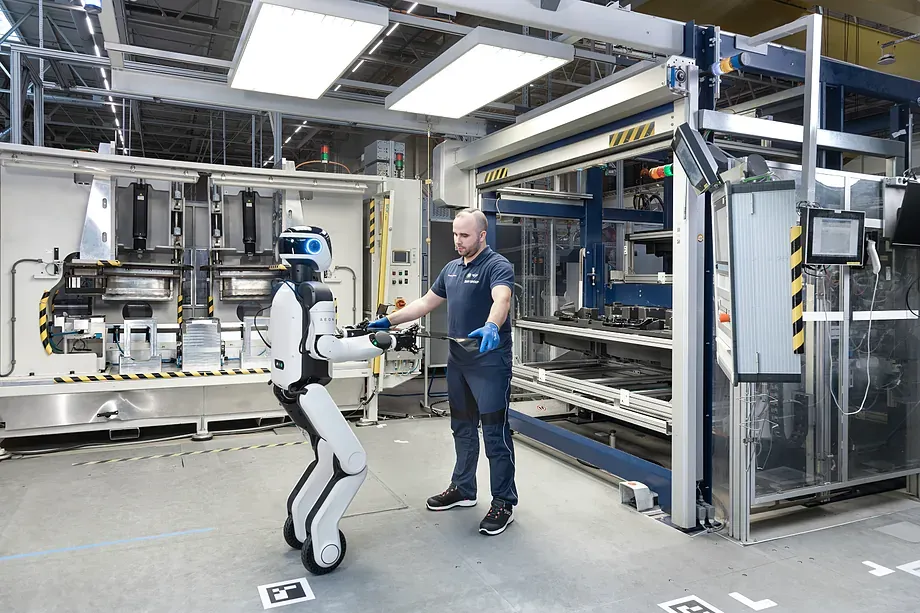
- BMW & Aeon: The Leipzig plant is now scaling the use of Aeon robots for battery assembly. These units move 2.5 times faster than humans and handle high-voltage components with zero fatigue.
- Hyundai & Atlas: Following recent Fully automated car production facilities news, Hyundai is readying the 1.9-meter-tall Atlas robot for mass production, aiming for total complex assembly by 2030.
- Tesla & Optimus: A leader in AI-driven autonomous assembly lines 2026, Tesla uses its proprietary humanoids to solve the 10% labor shortage currently affecting the sector.
- Mercedes-Benz & Apollo: These robots now manage logistics and quality control in Berlin, allowing the brand to reduce production costs by up to 50%.
Economic Reality
This transformation isn't about tech—it's about survival. With global absenteeism rising, autonomous machines offer a stable, high-precision alternative. Experts on devs.com.pt suggest that within five years, these "digital interns" will be as common as any other worker on the shop floor.
The path is set: the car of the future will be built by machines that never take breaks and never need the lights turned on.
 Related News