
The Rise of the "Dark Factory": Automotive Production Without Humans
The automotive industry has reached a tipping point in 2026.
The automotive industry has reached a tipping point in 2026. Global giants like Hyundai, BMW, Mercedes-Benz, and Tesla are moving beyond experiments, actively deploying humanoid robots to lead production lines.
According to IT news in Portugal, we are entering the era of Lights-out manufacturing automotive industry 2026—a shift toward "dark factories" that operate 24/7 without lighting or human intervention.
The AI-Powered Workforce:
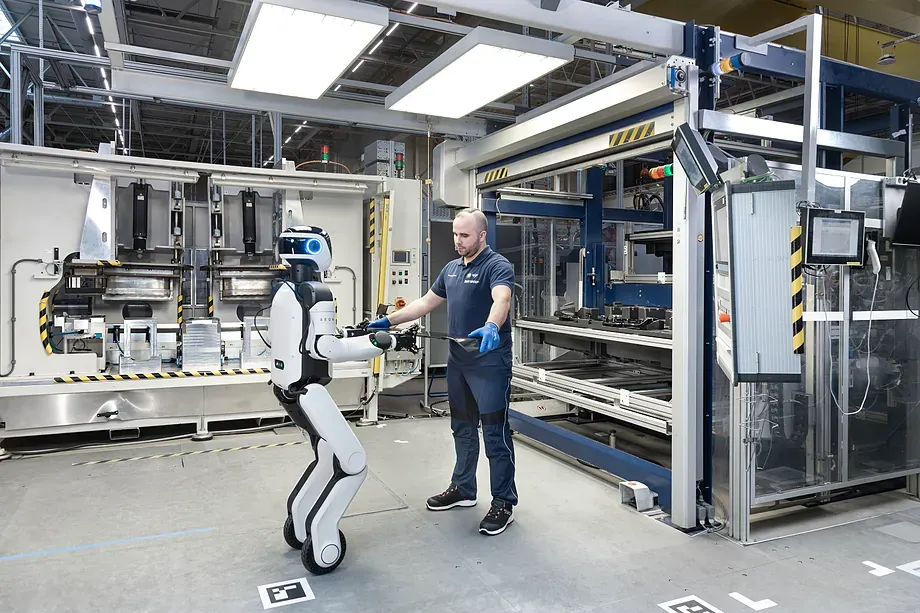
- BMW & Aeon: The Leipzig plant is now scaling the use of Aeon robots for battery assembly. These units move 2.5 times faster than humans and handle high-voltage components with zero fatigue.
- Hyundai & Atlas: Following recent Fully automated car production facilities news, Hyundai is readying the 1.9-meter-tall Atlas robot for mass production, aiming for total complex assembly by 2030.
- Tesla & Optimus: A leader in AI-driven autonomous assembly lines 2026, Tesla uses its proprietary humanoids to solve the 10% labor shortage currently affecting the sector.
- Mercedes-Benz & Apollo: These robots now manage logistics and quality control in Berlin, allowing the brand to reduce production costs by up to 50%.
Economic Reality
This transformation isn't about tech—it's about survival. With global absenteeism rising, autonomous machines offer a stable, high-precision alternative. Experts on devs.com.pt suggest that within five years, these "digital interns" will be as common as any other worker on the shop floor.
The path is set: the car of the future will be built by machines that never take breaks and never need the lights turned on.
Portugal tech news in your inbox
Top stories, companies hiring and events. Free, no spam.