
1. The Phased Wind-Down Schedule
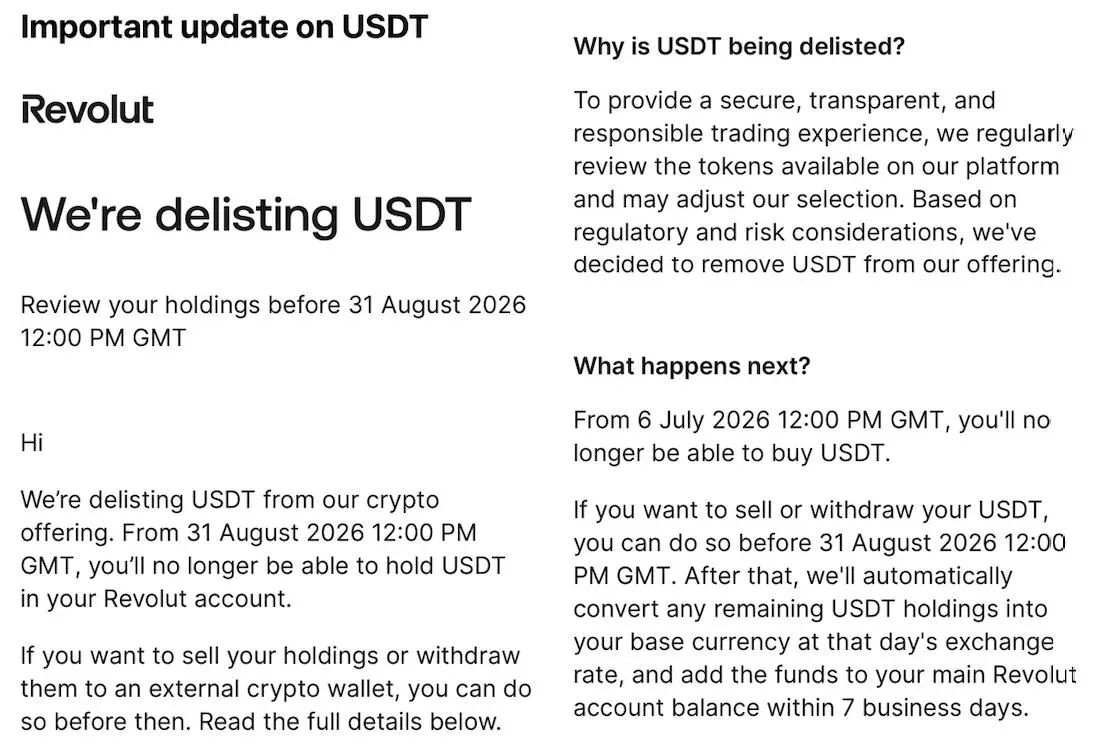
Digital banking giant Revolut has officially begun notifying its European Economic Area (EEA) users about the complete removal of the Tether (USDT) stablecoin. To prevent sudden liquidity issues, the platform is rolling out a strict, phased exit plan:
- July 6, 2026: All user purchases of USDT are completely disabled.
- July 30, 2026: The platform stops accepting any new USDT deposits. Any incoming transfers will be automatically rejected.
- August 31, 2026: Final delisting takes effect. Any remaining USDT balances will be automatically converted into the user's local fiat currency (like the Euro) at the prevailing market exchange rate.
2. The Compliance Driver: EU MiCA Rules
This major shift is a direct response to EU MiCA stablecoin compliance requirements. The European Union’s Markets in Crypto-Assets (MiCA) framework forces licensed digital asset platforms to only host authorized e-money tokens. Because Revolut secured its official European Crypto-Asset Service Provider (CASP) license, it must strictly follow these rules to maintain its operations.
3. The Stablecoin Standby
The core reason behind the Revolut Tether removal European regulations clash comes down to asset reserves. The MiCA framework mandates that stablecoin issuers keep a large part of their reserves in regulated European credit institutions. Tether’s leadership has openly criticized these laws and refused to follow the strict reserve mandates, creating a massive rift with European compliance structures.
4. Market Consequences for Fintech Offerings
This decision highlights the broader reality of the Revolut delists USDT stablecoin Europe 2026 move. Major financial companies across the continent can no longer tolerate legal risks around non-compliant digital assets, even if they hold billions in global market capitalization. As a result, the European fintech sector is rapidly opening new corporate jobs for compliance analysts and risk managers to help transition retail portfolios toward fully compliant alternatives like USDC.

 Related News