
Portugal and China are restarting their science partnership. On October 19, in Beijing, Portugal’s Minister of Education, Science and Innovation, Fernando Alexandre, and China’s Minister of Science and Technology, Yin Hejun, signed a Joint Declaration that sets five priority areas for research and innovation. It came out of the 10th Joint Committee on Science and Technology, which had been suspended since 2019.
The five priority areas
The declaration names five fields:
- the ocean and the blue economy
- energy, climate, batteries and green hydrogen
- agriculture, bioeconomy and food
- health, healthy aging and medical technologies
- conservation of cultural heritage through science
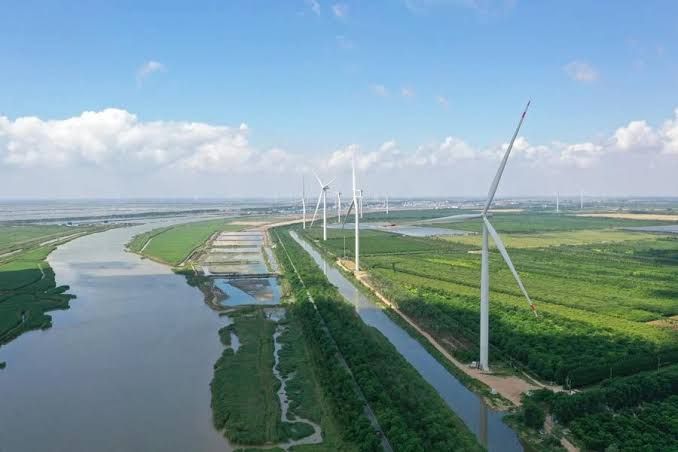
For Portugal, that mix covers ocean research cooperation and the green hydrogen Portugal has been building up, alongside health and agriculture.
What comes next
The relaunched committee is tasked with negotiating a Portugal-China Joint Action Plan for Science and Innovation for 2027 to 2030. The framework could include bilateral funding mechanisms, researcher mobility, support for collaboration between institutions and companies, and networks of joint laboratories and research consortia. Technical meetings will follow to put it into practice. Anyone following global tech news will likely see these projects surface in the coming years.
Safeguards and higher education
The declaration stresses safe, transparent and reciprocal cooperation, with respect for academic freedom, scientific integrity and applicable law, including European rules for Portugal. Higher education is part of the package too, with a focus on academic mobility and joint supervision of doctoral programs.
The delegation
Alexandre and Secretary of State for Science and Innovation Helena Canhão lead a delegation that includes the heads of the Agency for Research and Innovation, the Institute for Higher Education, the rectors’ council, the polytechnic council and rectors and researchers from 15 Portuguese institutions. The trip began on October 15, lasts a week and stops in Tianjin, Beijing and Shanghai. It continues a dialogue that started last June, during the minister’s first visit to China.
For people working in research, energy or health technology, digital innovation events will be a place to watch how this plan takes shape.
 Related News