
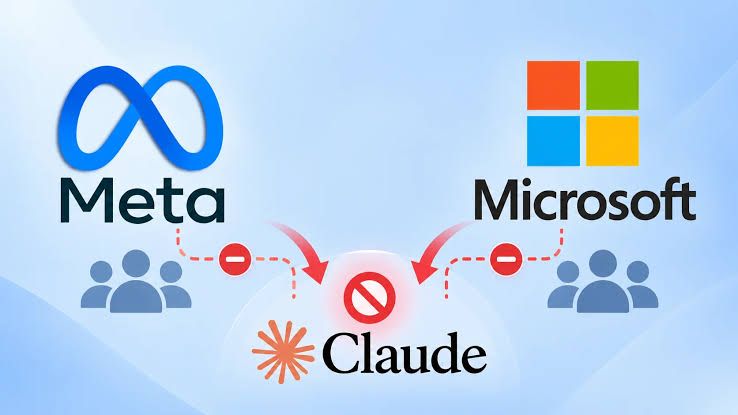
Big tech has a habit of buying from a company and competing with it at the same time. Meta and Microsoft AI tools are the latest example. According to a report from The Information on October 5, both companies have begun cutting how much their own employees use Anthropic’s Claude, nudging engineers toward in-house coding assistants. The move is about internal budgets and workflows, not about pulling Claude from customers.
Microsoft turns down the dial
Microsoft had expected to spend more than $1 billion a year on Anthropic technology internally. That estimate has since dropped by over a third, after management told staff to use Claude less and lean on Microsoft’s own options, such as GitHub Copilot and OpenAI-based tools.
The sharpest change is in spending limits. In Microsoft’s cloud and AI unit, monthly AI caps have reportedly fallen from $100,000 per employee to around $10,000 in most cases. Those are ceilings, not what people actually spent. Still, some engineers who enjoyed wide room to try different models aren’t thrilled.
Customers see a different picture. Spending on Anthropic models through Microsoft’s enterprise platforms is said to keep growing, even as the company squeezes its own staff.
Meta builds its own bench
At Meta, Claude Code users reportedly halved, from roughly 60,000 earlier this year to about 30,000. Layoffs played a part, but the report points mainly to Meta’s push for homegrown tools built on its own models: MetaCode, with more than 30,000 internal users, and Muse Code, with over 6,000. Muse Code began external testing with clients in August.
Here’s the twist. Meta reportedly put over $105 million toward Claude Code in a 28-day window. Fewer users doesn’t automatically mean a smaller bill.
A pivot, not a breakup
Both companies remain major Anthropic customers while also competing with it. Think of two neighbors who share a fence and sell lemonade on the same street. The reported $65 billion annualized revenue pace at Anthropic suggests demand hasn’t cooled. What we’re watching is tighter budgets and sharper rivalry, not a clean exit.
Workplace AI governance doesn’t change with the logo
Swapping one coding assistant for another doesn’t remove the risks. These tools can touch sensitive files, run commands and handle credentials, no matter who built them.
Earlier analyses by Cybersecurity News described flaws in Claude Code that could allow unauthorized execution and API key theft, which Anthropic fixed before they became public. Microsoft’s side had a similar scare: the patched RoguePilot issue showed how a malicious command hidden in a GitHub Issue could lead to repository takeover.
So what does good workplace AI governance look like in practice?
- strict permissions for whatever the assistant can access
- trusted project settings instead of open defaults
- careful review of actions the AI proposes or runs
What it means for developers
If you write code for a living, the lesson is practical. Your company’s preferred assistant can change with a budget memo, so avoid building habits that depend on one vendor. devs.com.pt recently reported on how fast AI tooling is reshaping developer routines, and this story fits the same pattern. If you’re curious how other software development companies handle these choices, comparing their approaches can be revealing.
The takeaway is simple. Claude AI at work isn’t disappearing at Meta or Microsoft, but control over developer tools is becoming a strategic matter, and money is steering the wheel.
 Related News